
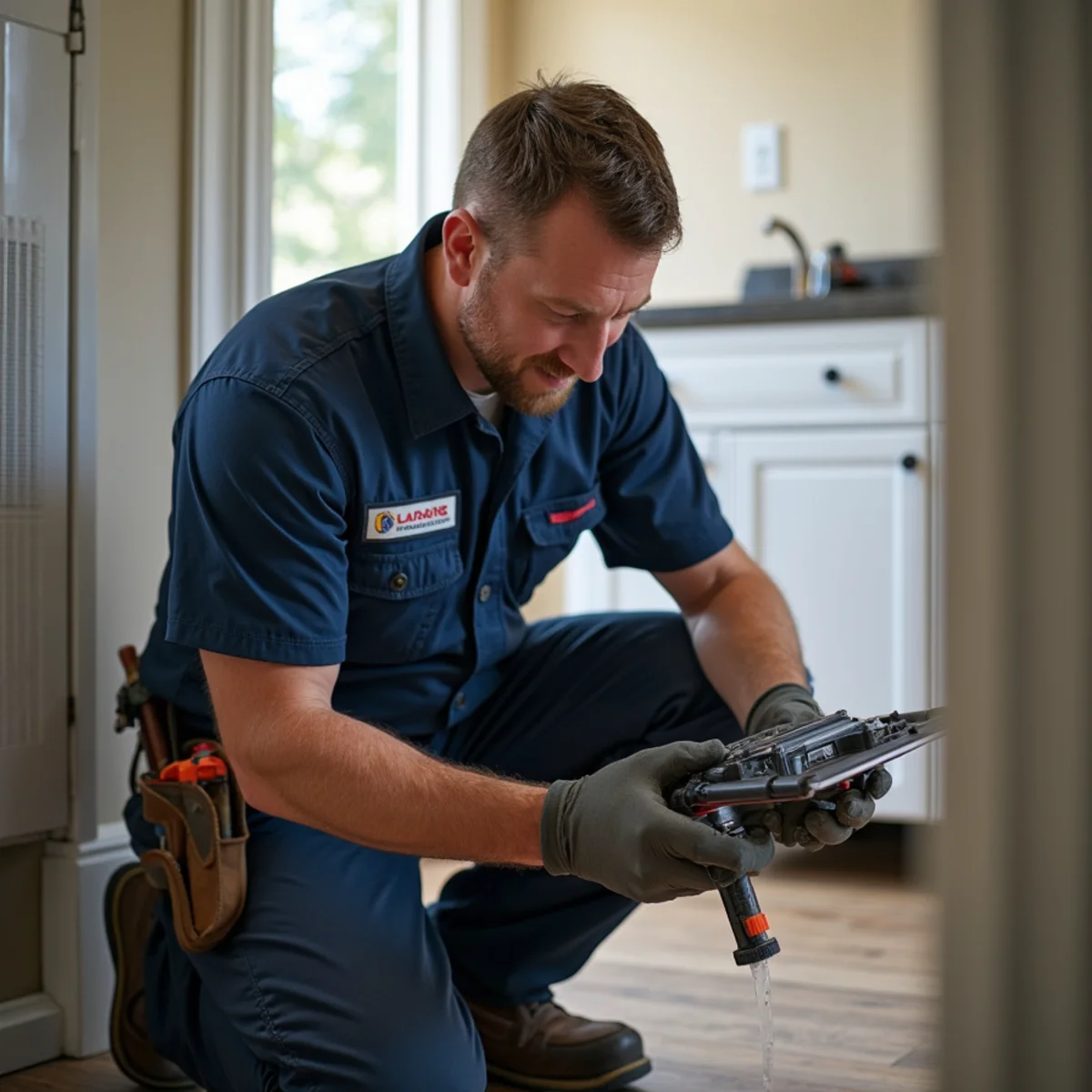
A hidden leak wastes water, damages your home, and feeds mold long before you see it. The hardest part is not fixing the leak — it is finding it without tearing open every wall. We locate leaks precisely using acoustic listening equipment, moisture meters, and pressure testing, so we open only what we have to.
Long Island homes with long service lines, older supply piping, and finished basements are especially prone to leaks that hide for months. If your water bill jumped for no reason, you hear water running when everything is off, or a stain keeps reappearing, there is a leak — and finding it early is far cheaper than the damage it causes.
Signs You Need This Service
- A water bill that spiked with no change in usage
- The sound of running water when every fixture is off
- Warm spots on a floor, or a slab that stays damp (a possible slab leak)
- Stains on ceilings or walls that reappear after painting
- A musty smell, or mold returning in the same spot
- Low water pressure with no obvious cause
What Leak Detection With Us Includes
Every leak detection job is different, but here is what you can expect a Hydrosphere Corp visit to cover:
- A meter test with every fixture off to confirm an active leak and gauge its size
- Acoustic listening equipment to hear water escaping under pressure — even through concrete
- Moisture mapping and thermal clues to narrow the leak to a specific spot
- Pressure isolation by zone to pinpoint which line is failing
- Location of slab leaks and long underground service-line leaks
- A minimal-access repair that opens only what's needed to reach the line
- A re-test at the meter to confirm the leak is truly stopped
How we find a leak you can’t see
We start at the meter. With every fixture off, a moving meter confirms an active leak and gives us a sense of its size. From there we isolate sections of the system and use acoustic listening equipment to hear water escaping under pressure — even through concrete or behind walls — along with moisture meters and thermal clues to zero in on the exact spot.
That precision is the whole point. A leak located within a small area means a small repair. Guessing means opening walls and floors you did not need to touch. We would rather spend the time finding it right.
Slab leaks and long service lines
Some Huntington and north-shore homes — especially waterfront estates in Cold Spring Harbor or Lloyd Harbor — have long underground service lines that develop hidden leaks far from the house. Others have supply lines run under slabs. Both are exactly the kind of leak that hides for months and shows up as a mysteriously high bill. We locate and address these without excavating your whole yard or floor.
Why we start at the meter
Before we open anything, we confirm the leak is real and get a sense of its size. With every fixture off, a moving water meter proves water is escaping. From there we isolate sections of the system and use acoustic and moisture tools to narrow it to a small area.
That discipline is the whole point of leak detection: locating the leak precisely means a small repair instead of opening walls and floors on a guess. We'd rather spend the time finding it right than tear up your home hunting for it.
From finding the leak to fixing it for good
Locating the leak is step one; the repair is step two. When the cause is failing supply pipe rather than a single fitting, repiping is the lasting fix. And if a leak has already caused damage, we coordinate emergency water cleanup so drying starts inside the mold window.
We find hidden and slab leaks in older and waterfront homes across Cold Spring Harbor and Northport, where long service lines hide leaks the longest.
Our Process
- 1
Confirm there is a leak
A meter test with fixtures off tells us whether water is escaping and roughly how fast — before we start looking.
- 2
Locate it precisely
Acoustic equipment, moisture mapping, and pressure isolation narrow the leak to a specific spot, not a general area.
- 3
Access with minimal damage
Because we know where it is, we open the smallest possible area to reach and repair the line.
- 4
Repair and verify
We fix the leak, re-test, and confirm the meter has stopped moving before we consider the job done.
What Affects the Price
We don’t post flat prices, because an honest number depends on your specific situation. For non-emergency work you’ll always get a written scope before we begin. The main factors:
- Location and type of leak — supply line, drain, or under a slab
- How accessible the leak is once located
- Whether the leak is behind finished walls, under flooring, or underground
- The equipment required to pinpoint it
- The repair itself, which depends on pipe material and condition
Why Choose Hydrosphere Corp for Leak Detection
You have plenty of plumbers to call on Long Island. Here is what sets our leak detection apart:
Licensed & insured
A licensed plumbing and heating company — permits pulled and inspections handled where the work requires them.
4.9★ from 20 reviews
Serving Long Island since 2019, with a track record Long Island homeowners have reviewed and referred.
Written scopes, honest options
Repair-versus-replace explained in plain English, with the price in writing before non-emergency work begins.
24/7 emergency response
When this problem can’t wait, we answer — containment first, then a lasting fix.
Leak Detection Across Long Island
We provide leak detection throughout Huntington and the surrounding towns — from Huntington and Huntington Station to Northport, Commack, Dix Hills, and Melville — and across Suffolk County and eastern Nassau County. Response time depends on crew location, traffic, and the job, and we’ll give you a realistic window when you call. See every community we serve or call (831) 290-4327 to confirm coverage for your address.
Frequently Asked Questions
Related Reading
How to Spot a Hidden Water Leak in an Older Home
Hidden leaks do their damage quietly, for months, before you ever see water. Here are the tell-tale signs — especially in older homes.
Local angleCoastal Corrosion: Protecting South-Shore Home Plumbing
Living near the water is wonderful for everything except your plumbing. Salt air and coastal moisture accelerate corrosion — here is how to fight back.